Card Issuing API Built For Developers.
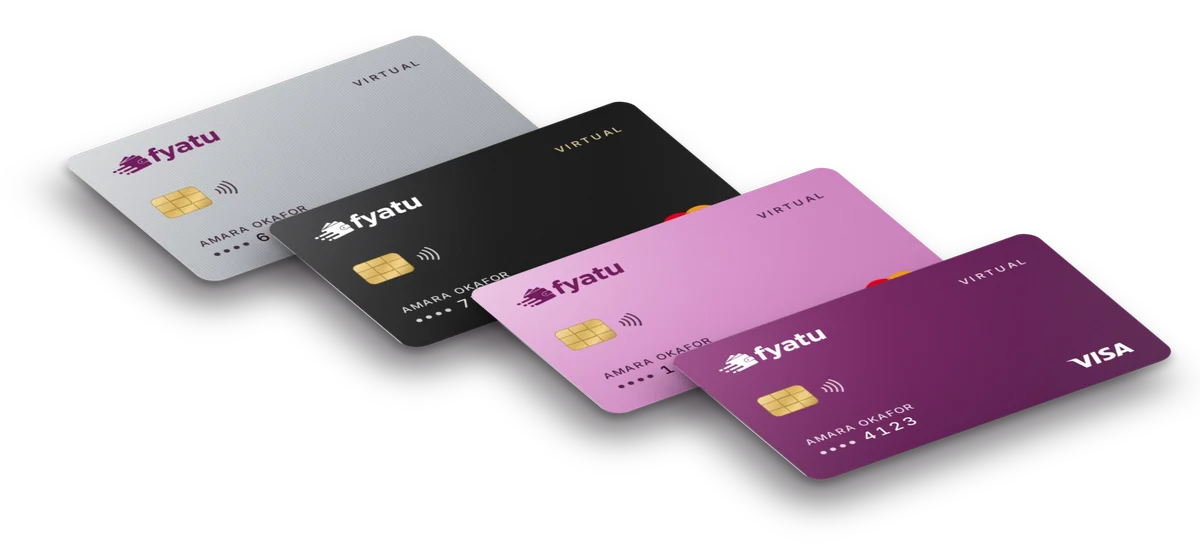
Create cardholders, issue corporate virtual cards, fund them and follow every payment, with one REST API, signed webhooks and a free sandbox.
Built for the way businesses spend




















The request, in full
This is the real one. Copy it, add your sandbox key and you have a card.
# Issue a corporate virtual card to a verified cardholder
curl -X POST https://api.fyatu.com/api/v3.20/cards \
  -H "Authorization: Bearer $FYATU_API_KEY" \
  -H "Content-Type: application/json" \
  -d '{
    "cardholderId": "chl_01HXYZ1234ABCDEF5678",
    "binId": "USVISAV01",
    "amount": 100.00,
    "customName": "Ads team"
  }'
// 201 Created
{
  "data": {
    "id": "crd_01HXYZ5555ABCDEF1111",
    "cardholderId": "chl_01HXYZ1234ABCDEF5678",
    "status": "ACTIVE",
    "cardType": "VIRTUAL",
    "cardBrand": "VISA",
    "last4": "4123",
    "expirationDate": "06/2030",
    "balance": 100.00,
    "currency": "USD"
  }
}
// Sent to your endpoint when the card is ready
{
  "event": "CARD_ISSUED",
  "eventId": "evt_01HXY123456ABCDEF",
  "environment": "LIVE",
  "data": {
    "cardId": "crd_01HXYZ5555ABCDEF1111",
    "status": "ACTIVE",
    "cardBrand": "VISA",
    "last4": "4123",
    "balance": 100.00,
    "is3ds": true
  }
}
- RESTJSON in, JSON out
- 38Webhook events
- $10,000Test funds in the sandbox
- $0To build and test
Built to run in production
The parts of a card integration that usually cause incidents are handled in the API.
-
Signed webhooks
Every event is signed with HMAC-SHA256, so your endpoint can prove it came from us before acting on it.
-
Idempotency keys
Send an Idempotency-Key header with a request and a retry returns the first result. A timeout never issues a second card.
-
3-D Secure by webhook
One-time codes for online payments arrive as an event, ready to show in your own product.
-
One environment switch
The sandbox runs the same API as production. Going live is a change of keys and base URL.
-
Predictable responses
One response shape and stable error codes on every endpoint, so client code stays short.
Open the API reference →
From sign-up to a first card
Four steps, all of them available in the sandbox before you pay anything.
- 1
Get your sandbox keys
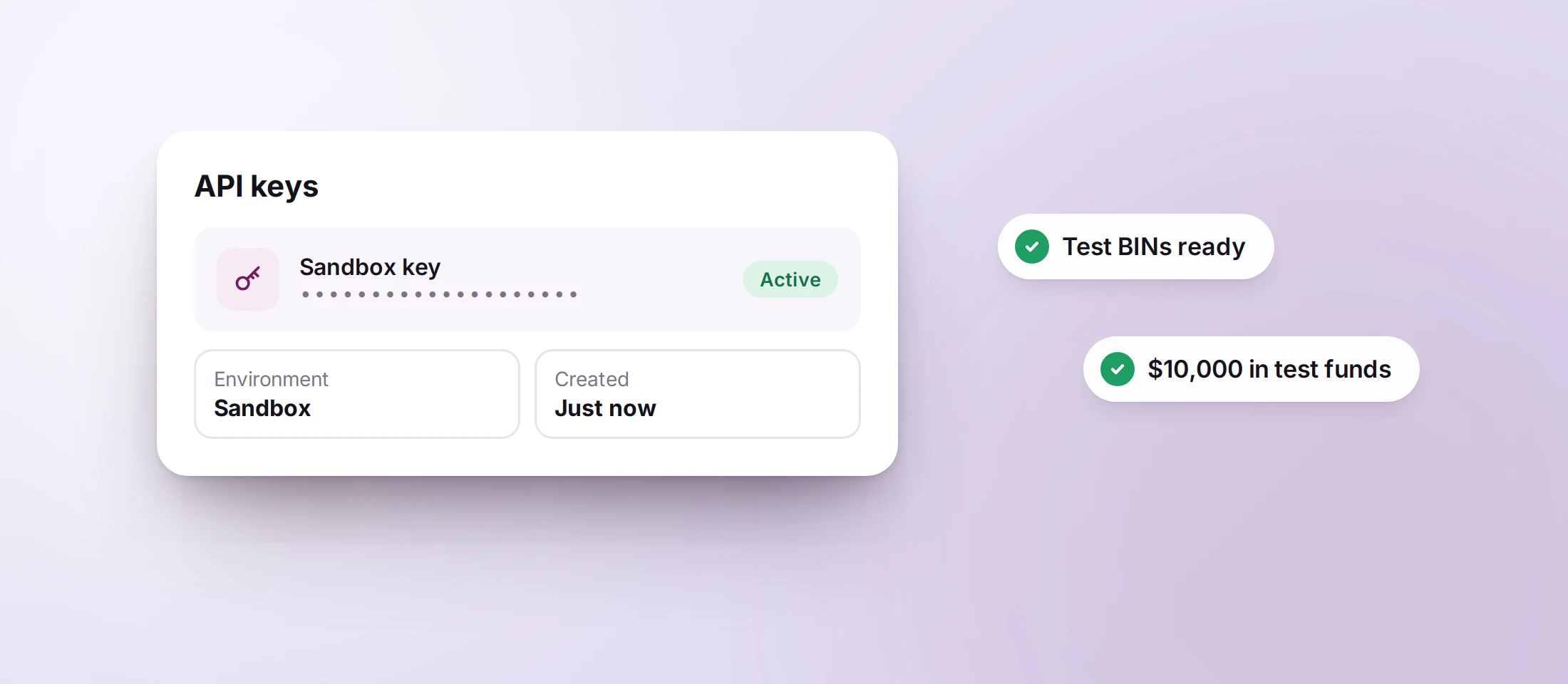
Sign up with a work email. Your keys and test BINs are in the portal as soon as you are in.
- 2
Create a cardholder
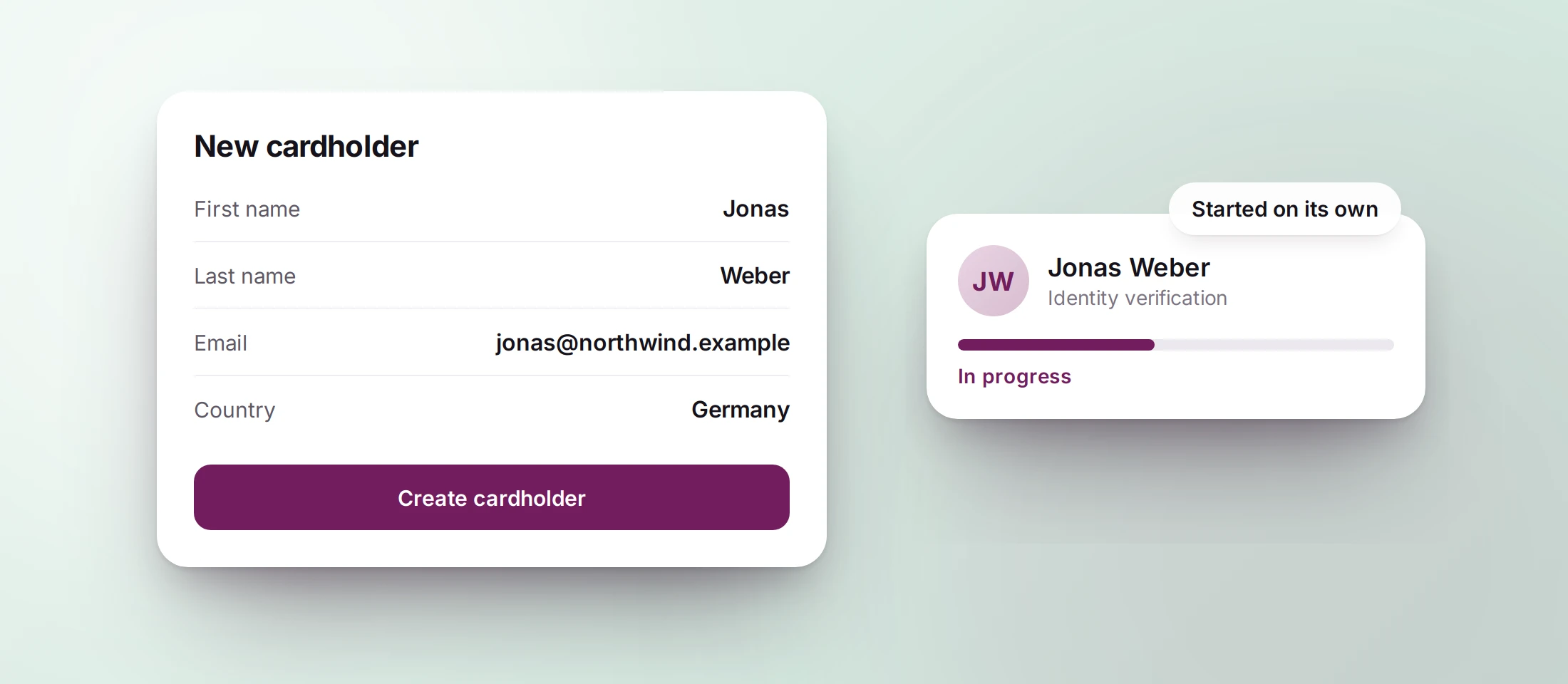
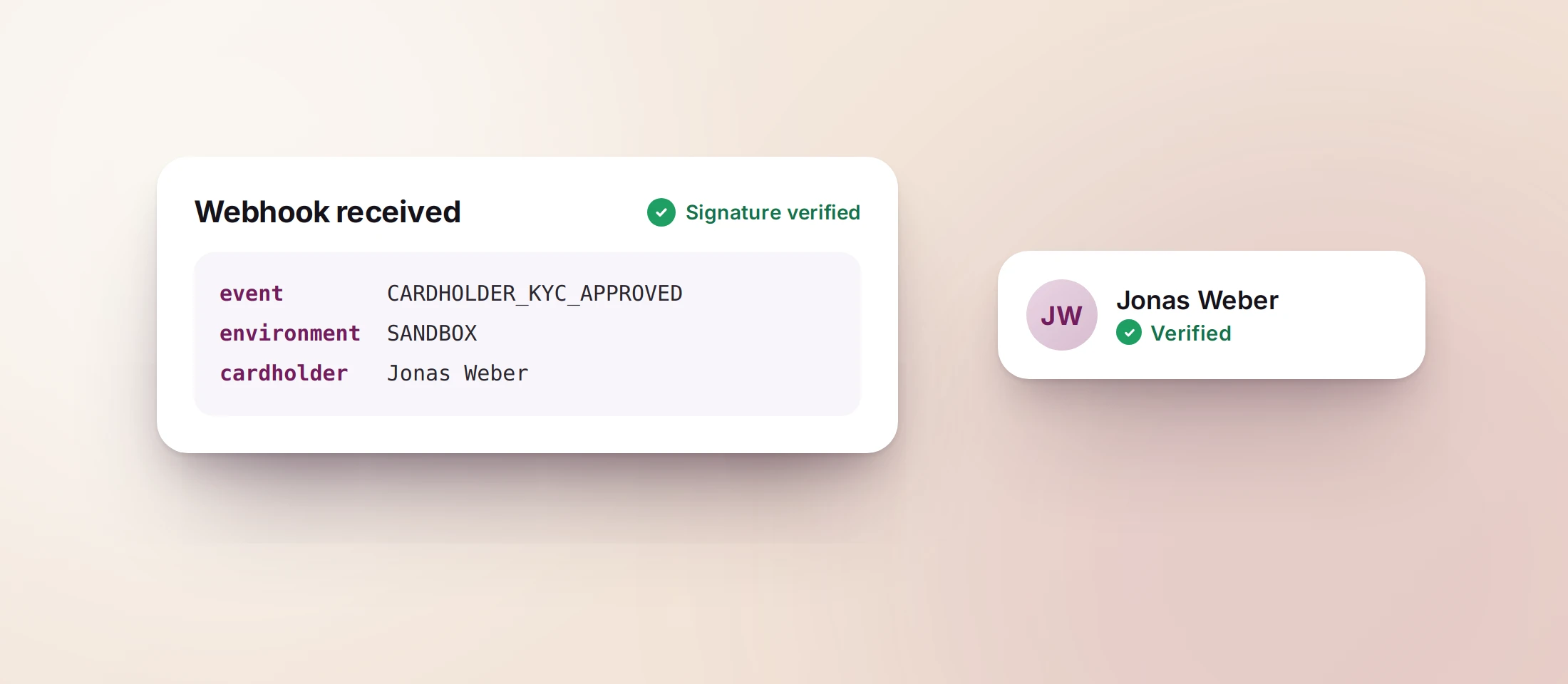
Send the person’s details. Identity verification starts on its own, and you do not build a KYC flow.
- 3
Receive the approval
A signed webhook tells your system when the cardholder is verified.
- 4
Issue a card
One request with the cardholder, the BIN and an opening balance. The card comes back active.
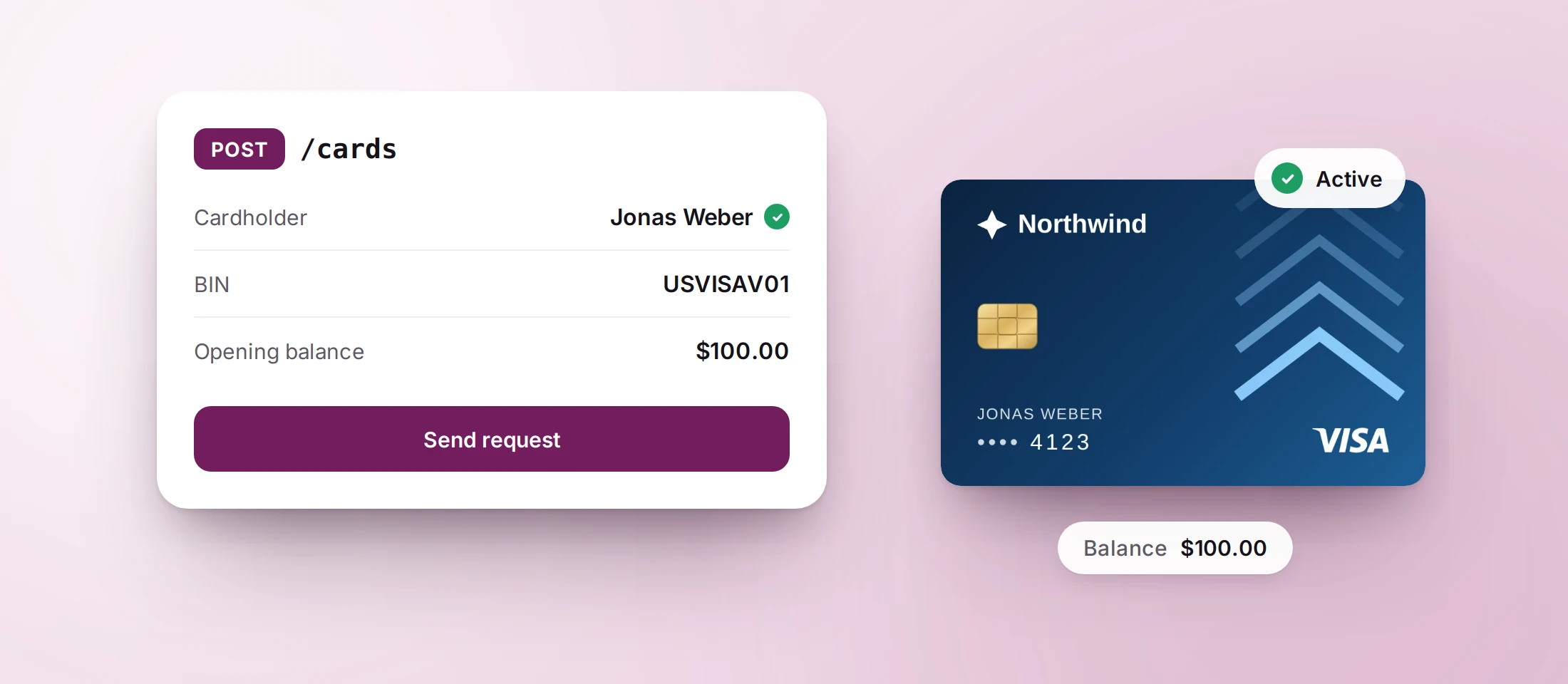
- All cardholders must be KYC verified. The verification is part of the API.
- Test BINs behave like live ones, including declines and 3-D Secure.
Read the details
The documentation is public. You do not need an account to read it.
Free reference tools
Open to everyone, with no account.
Developer questions
Is the sandbox free?
Yes. Sign up with a work email and your sandbox keys and test BINs are in the portal as soon as you are in, with $10,000 in test funds. The sandbox runs the same API as production.
How do we move from the sandbox to live cards?
Change your API key and the base URL. Requests, responses and webhooks are the same in both environments, so the code you tested is the code you run.
How do we know a webhook came from Fyatu?
Every event is signed with HMAC-SHA256. Work out the signature on your server with your signing secret and compare it with the one sent in the request before acting on it.
What happens if a request times out and we retry it?
Send an Idempotency-Key header with the request. A retry with the same key returns the first result, so a timeout never issues a second card.
Do we have to build identity verification?
No. All cardholders must be KYC verified, and the verification is part of the API: it starts when you create the cardholder, and a signed webhook tells you when the person is approved.
How do 3-D Secure codes reach the cardholder?
The one-time code for an online payment arrives at your server as a webhook event, ready to show in your own product.
What do responses and errors look like?
Every endpoint answers in one shape, with the same keys for a success and for an error, and errors carry stable codes your client can rely on.
Do we need an account to read the documentation?
No. The documentation, the API reference and the webhook events are public.